A few years ago, during my HeHealth journey, I learned something the hard way: regulation isn’t a rulebook you simply “follow.” It’s a living organism. And we were ahead of time.
It shifts with leadership. It shifts with public priorities. It shifts when technology moves faster than the frameworks built to govern it. And when you’re building in healthcare AI, those shifts don’t feel theoretical — they feel like real delays, real uncertainty, and real pressure on every decision you make.
Back then, it often felt like I was building while the goalposts were still being carried onto the field. Investors asked for certainty when the truth was: the most important questions were still being interpreted in real time. Teams wanted clarity, but every new guideline draft and every new interpretation could change how you positioned the product, how you designed the workflow, and what you could responsibly claim.
People see the demo. They see the pitch. They see the milestones.
They don’t see the nights where your product roadmap gets hijacked by compliance interpretation. They don’t see the “maybe yes / maybe no” conversations that stall decisions for months. They don’t see how regulation silently shapes what founders dare to build — and what founders never even attempt.
In those moments, I kept repeating one belief to myself: if we’re building something that truly matters, we have to stay ahead of the curve, even when the curve isn’t fully visible yet.
Because regulation is not written in stone for millennia. It evolves.
And in January 2026, we’re watching that evolution happen in a very real way.
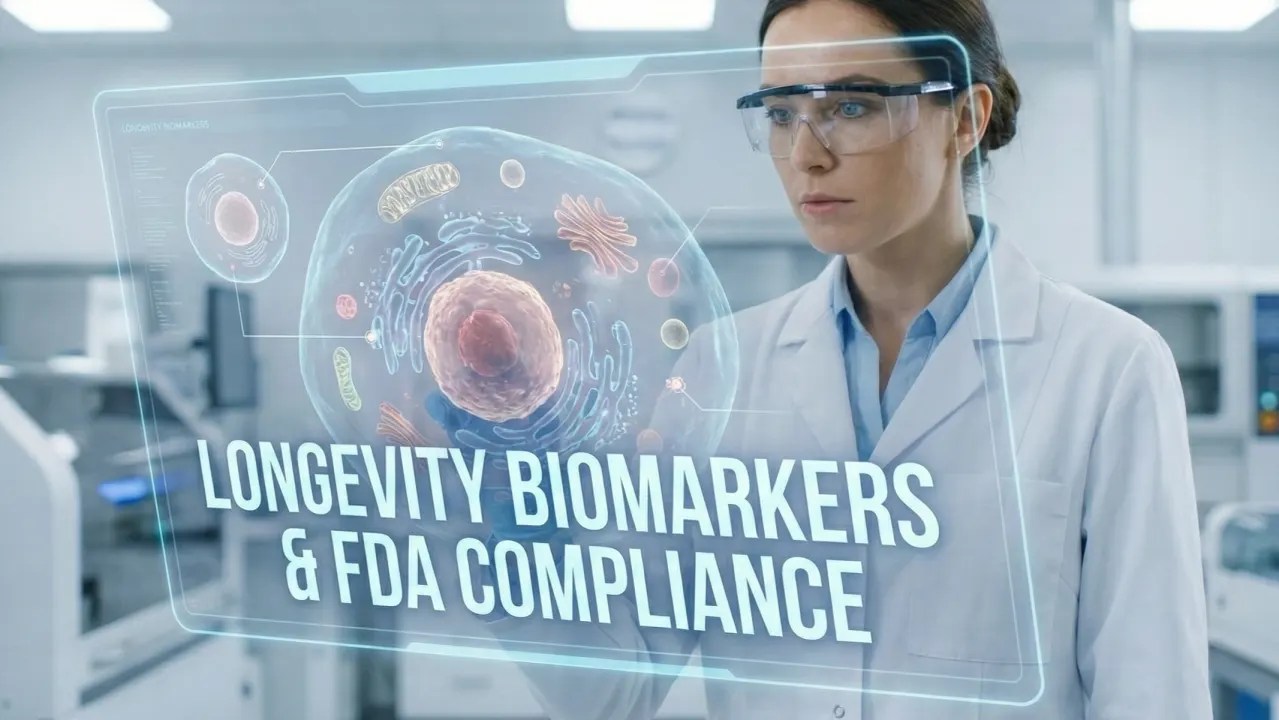
The U.S. FDA released updated guidance for Clinical Decision Support software and revised its stance around General Wellness products — and the signal is clear: the conversation is becoming more risk-based, more pragmatic, and more aligned with how AI and consumer biometrics are actually used in the real world.
This is not about “less regulation.” It’s about better regulation — guardrails that focus oversight where risk is truly high, while creating clearer lanes for lower-risk innovation to move forward responsibly. When frameworks become clearer, it doesn’t just help founders. It helps patients, clinicians, and the entire ecosystem — because it reduces ambiguity and encourages builders to design with safety and transparency from day one.
For me, this shift hits personally because I’ve lived on both sides of that timeline: the “early” phase, where innovation outruns guidance and founders pay the interpretation tax, and the “catch-up” phase, where the same work suddenly looks obvious and inevitable in hindsight.
That’s why I don’t look at 2026 as “finally we can build.” I look at it as: we were early — and now the world is arriving.
And that’s exactly why my current biomarker work feels like it’s landing in perfect timing.
Right now, I’m building digital biomarkers across two frontiers.
The first is facial biomarkers: a phone-based, non-invasive way to measure things people experience daily but can’t quantify reliably — hydration direction, inflammation signals, and biological aging trajectory. The world has spent years optimizing skincare and wellness based on hope, guesswork, and subjective perception. But the next era is about making invisible physiology measurable, personal, and daily — not for vanity, but for empowerment.
The second is sepsis biomarkers using rPPG-driven signals. As an emergency physician, sepsis isn’t theoretical to me. It’s minutes. It’s early deterioration that hides behind “normal vitals” until it doesn’t. If we can detect microvascular and perfusion-related change earlier using scalable tools — especially tools that don’t require expensive monitors or ICU-level infrastructure — we can shift outcomes at a population level, including in resource-limited settings.
This is where the regulatory evolution matters. Historically, anything touching “clinical decisions” or “critical illness” gets pushed into a zone of fear and friction by default. But as regulators sharpen their risk-based lens, there’s more room for nuance: clearer boundaries for wellness and monitoring tools, clearer expectations for transparency, and more realistic recognition of how clinicians actually interact with decision support.
Still, here’s the line I want to be very clear about: I’m not celebrating a world where anyone can ship medical AI without accountability. Healthcare is not the place for hype.
What I’m celebrating is smarter regulation that supports innovation while demanding responsibility — clarity in labeling, truth in claims, validation in performance, and transparency in how outputs are generated and used. The future isn’t “AI replaces clinicians.” The future is human-in-the-loop at scale, where AI extends capability while clinicians retain judgement.
A decade from now, “digital biomarkers” won’t feel like a category. They’ll feel like a layer — the missing physiological middle between how a person feels and what shows up only when disease becomes obvious. When that layer becomes measurable and accessible, healthcare changes from episodic to continuous. From reactive to preventive. From guesswork to quantification.
And when that happens, we’ll look back and realize the winners weren’t the teams who shipped the fastest. They were the teams who shipped with trust.
If you’re building in healthcare AI right now, my message is simple: don’t fear regulation. Understand it. Help shape it. Build responsibly ahead of it. Because it will evolve again — with new leadership, new public health needs, and new technology frontiers we can’t fully predict today.
Facial biomarkers and sepsis biomarkers are only the beginning. We’re building for the global population — and we’re just getting started.
You finished · 4 min read
Originally published on LinkedIn by Dr Yudara Kularathne MD, FAMS(EM).